
The ecommerce industry has grown rapidly over the past decade, and with this growth comes intense competition. Thousands of online stores compete for visibility on search engines like Google. In such a competitive environment, search engine optimization has become one of the most effective strategies for attracting organic traffic and increasing online sales. However, one of the most common questions businesses ask is about ecommerce SEO pricing.
Understanding ecommerce SEO pricing is essential for businesses that want to invest in long-term online growth. SEO is not a one-size-fits-all service, and pricing can vary depending on several factors such as website size, competition, and the complexity of optimization strategies.
Unlike paid advertising campaigns where you pay for every click, SEO focuses on improving organic search rankings. Once your ecommerce website starts ranking higher in search results, it can attract consistent traffic without ongoing advertising costs.
In this comprehensive guide, we will explore everything you need to know about ecommerce SEO pricing, including the factors that influence SEO costs, common pricing models, and how businesses can choose the right SEO investment for their online store.
What Is Ecommerce SEO Pricing?
Ecommerce SEO pricing refers to the cost businesses pay for search engine optimization services specifically designed for ecommerce websites. These services help online stores improve their visibility in search engine results pages and attract more customers.
SEO pricing varies widely depending on the scope of services provided. Some businesses may require basic SEO improvements, while others need comprehensive optimization strategies that include technical SEO, content marketing, and link building.
Ecommerce SEO services typically include:
- Keyword research
- Product page optimization
- Category page optimization
- Technical SEO improvements
- Content marketing
- Link building
- Performance tracking and reporting
The cost of these services depends on the level of expertise required and the complexity of the ecommerce website.
Why Ecommerce SEO Is Worth the Investment
Before discussing pricing, it is important to understand why SEO is valuable for ecommerce businesses.
Long-Term Traffic Growth
One of the biggest advantages of SEO is its ability to generate long-term traffic. Once your website ranks well in search results, it can continue attracting visitors for months or even years.
Higher Conversion Rates
Visitors who arrive through organic search are often actively searching for products. This means they are more likely to convert into customers.
Lower Marketing Costs Over Time
Although SEO requires an initial investment, it often becomes more cost-effective than paid advertising in the long run.
Improved Brand Authority
Websites that rank on the first page of search results are often perceived as more trustworthy by users.
Because of these benefits, many businesses consider SEO one of the most valuable digital marketing investments.
Factors That Influence Ecommerce SEO Pricing
Several factors affect the cost of SEO services for ecommerce websites. Understanding these factors helps businesses determine an appropriate SEO budget.
Website Size
One of the biggest factors influencing ecommerce SEO pricing is the size of the website.
Ecommerce websites often contain hundreds or thousands of product pages. Optimizing each page requires significant time and effort.
For example:
- Small ecommerce stores may have 50–100 product pages.
- Medium-sized stores may have several hundred products.
- Large ecommerce websites may contain thousands of products.
The larger the website, the more work is required for optimization.
Competition Level
Another important factor is the level of competition in the industry.
Highly competitive industries such as electronics, fashion, and fitness often require more aggressive SEO strategies.
In competitive markets, SEO professionals may need to invest more time in content creation, link building, and technical optimization.
Target Market
SEO costs may also vary depending on the geographic market you are targeting.
For example:
- Local ecommerce stores may focus on regional keywords.
- National ecommerce businesses compete across an entire country.
- Global ecommerce websites compete internationally.
Targeting larger markets often requires more advanced SEO strategies.
Technical Complexity
Some ecommerce websites require extensive technical improvements before they can rank effectively.
Common technical SEO issues include:
- slow website speed
- duplicate content
- broken links
- poor mobile optimization
- indexing problems
Fixing these issues may increase SEO costs.
Content Creation Requirements
Content plays a major role in SEO success. Ecommerce websites often need additional content such as blog posts, product guides, and category descriptions.
Creating high-quality content requires research, writing, and optimization, which adds to overall SEO pricing.
Common Ecommerce SEO Pricing Models
SEO agencies and consultants usually offer different pricing models depending on their services.
Monthly SEO Retainers
The most common pricing model is a monthly retainer.
With this model, businesses pay a fixed monthly fee for ongoing SEO services.
Monthly SEO services may include:
- keyword research
- on-page optimization
- technical improvements
- link building
- content marketing
- monthly performance reports
Monthly retainers provide continuous optimization and long-term growth.
Project-Based Pricing
Some businesses prefer project-based SEO services.
With this model, SEO professionals charge a fixed price for completing a specific project.
Examples of SEO projects include:
- ecommerce SEO audits
- technical SEO fixes
- keyword research campaigns
- website optimization projects
Project-based pricing is suitable for businesses that need one-time improvements.
Hourly SEO Consulting
Some SEO experts offer hourly consulting services.
This option allows businesses to receive expert guidance without committing to a long-term contract.
Hourly consulting is useful for:
- SEO strategy planning
- troubleshooting technical issues
- reviewing website performance
Typical Ecommerce SEO Pricing Ranges
While SEO costs vary depending on many factors, businesses can expect typical pricing ranges.
Small ecommerce websites often require basic SEO services.
Medium-sized ecommerce websites require more advanced strategies and ongoing optimization.
Large ecommerce platforms require comprehensive SEO campaigns that involve multiple specialists.
Businesses should focus on the value and results of SEO services rather than choosing the cheapest option.
What Is Included in Ecommerce SEO Services
Professional SEO services typically include several key components.
Ecommerce SEO Audit
An SEO audit analyzes the current performance of a website and identifies areas for improvement.
An ecommerce SEO audit evaluates:
- website structure
- page speed
- keyword targeting
- duplicate content issues
- technical errors
The audit provides a roadmap for improving search rankings.
Keyword Research
Keyword research identifies the search terms customers use when looking for products.
SEO professionals analyze search volume, competition, and user intent to select the most effective keywords.
On-Page Optimization
On-page SEO focuses on optimizing individual pages of the website.
This includes:
- optimizing titles and meta descriptions
- improving heading structure
- adding internal links
- optimizing images and alt text
Technical SEO
Technical optimization ensures that search engines can crawl and index the website effectively.
Key technical improvements include:
- improving website speed
- fixing broken links
- optimizing mobile performance
- implementing structured data
Content Marketing
Content marketing helps attract additional traffic through blog posts and educational resources.
Examples of ecommerce content include:
- buying guides
- product comparison articles
- tutorials and how-to guides
Link Building
Backlinks are an important ranking factor in SEO.
SEO professionals use strategies such as guest blogging and digital PR to build high-quality backlinks.
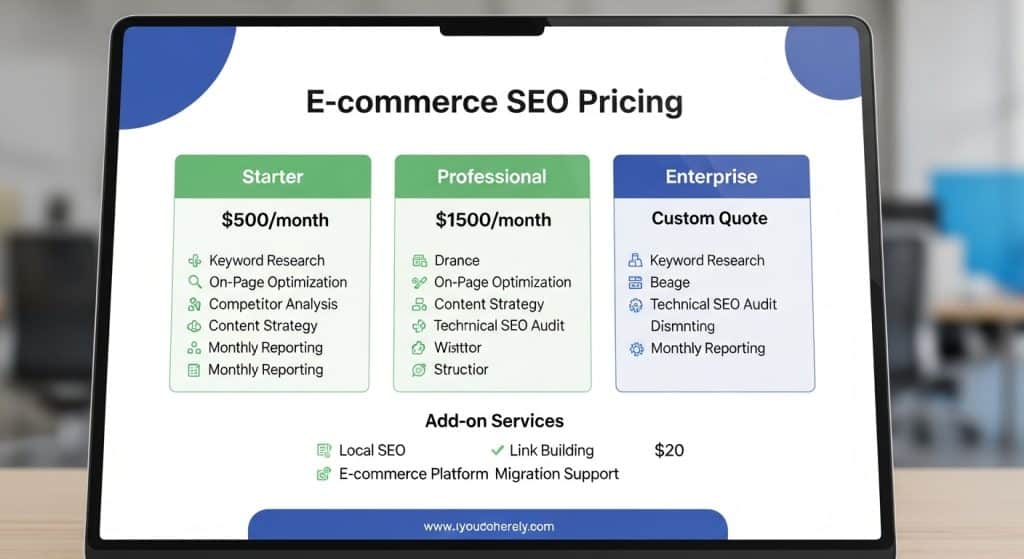
How to Choose the Right Ecommerce SEO Budget
Choosing the right SEO budget requires careful planning.
Businesses should consider several factors before investing in SEO services.
Define Your Business Goals
Determine what you want to achieve with SEO.
Common goals include:
- increasing website traffic
- improving search rankings
- increasing product sales
Evaluate Your Competition
Analyze competitors who rank well in search results.
If competitors invest heavily in SEO, you may need a larger budget to compete effectively.
Focus on Long-Term Results
SEO is a long-term strategy. Businesses should plan for ongoing optimization rather than expecting instant results.
Common Mistakes When Evaluating Ecommerce SEO Pricing
Many businesses make mistakes when choosing SEO services.
Common mistakes include:
- choosing the cheapest SEO provider
- expecting immediate results
- ignoring technical SEO issues
- failing to track SEO performance
SEO requires patience and consistent effort to achieve strong results.
Future Trends in Ecommerce SEO
SEO continues to evolve as search engines improve their algorithms.
Some important trends shaping the future of ecommerce SEO include:
- artificial intelligence in search algorithms
- voice search optimization
- visual product search
- personalized search results
Businesses that adapt to these trends will gain a competitive advantage.
Conclusion
Understanding ecommerce SEO pricing is essential for businesses that want to grow their online presence and attract more customers. While SEO costs vary depending on factors such as website size, competition, and technical complexity, investing in SEO is one of the most effective ways to achieve long-term success in ecommerce.
By implementing strong SEO strategies, optimizing product pages, improving website performance, and creating valuable content, ecommerce websites can increase their search visibility and generate consistent organic traffic.
Although SEO requires time and investment, the long-term benefits often outweigh the costs. Businesses that invest in professional ecommerce SEO services position themselves for sustainable growth in the competitive digital marketplace.